 HSA & FSA accepted; best-value for top quality care
 Same-day mental health, weight loss, and primary care appointments available

 Accept major insurances and cash-payHSA & FSA accepted; best-value for top quality careSame-day mental health, weight loss, and primary care appointments availableAccept major insurances and cash-pay
Telehealth's Role in Rural Family Healthcare: 2026 Guide
Written by Klarity Editorial Team
Published: Jun 5, 2026

Telehealth is the delivery of healthcare services through digital platforms, enabling rural families to access quality care without the constraints of distance or limited local providers. The role of telehealth in rural family healthcare has shifted from a pandemic workaround to a permanent infrastructure priority, backed by federal funding, expanded Medicare coverage, and a growing body of clinical evidence. Rural communities face a compounding set of barriers: geographic isolation, physician shortages, and unreliable broadband. Policymakers, clinicians, and families all have a stake in understanding what telehealth can realistically deliver and where its limits remain.
What barriers does telehealth overcome in rural family healthcare?
Rural healthcare access failures are structural, not incidental. A 2026 narrative review identifies four core barriers facing rural populations: geographic distance, workforce shortages, the digital divide, and social determinants of health. Each one compounds the others, and telehealth addresses all four to varying degrees.
Geographic distance is the most visible barrier. Families in frontier counties may travel two or more hours to reach a primary care physician, which means minor conditions go untreated and chronic disease management suffers. Virtual health services in rural areas eliminate that travel entirely for consultations, prescription renewals, and follow-up appointments.
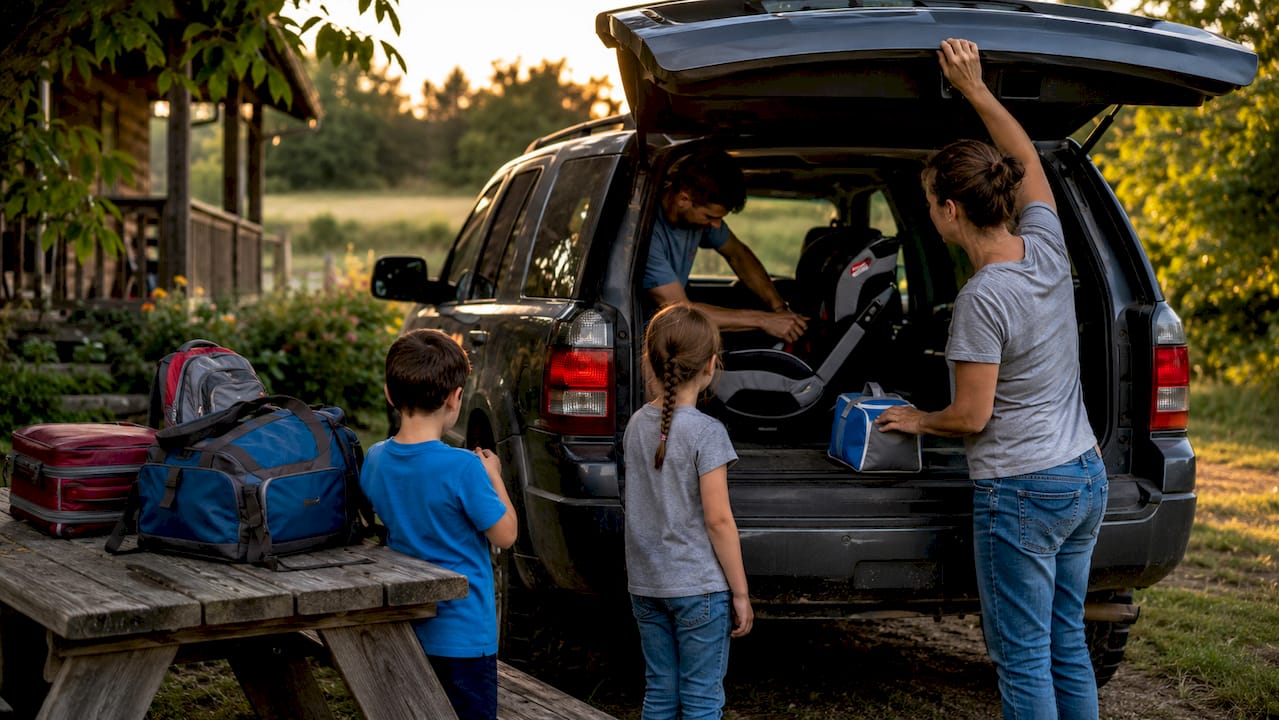
Workforce shortages are equally severe. Rural hospitals and clinics operate with fewer physicians per capita than urban centers, and specialist access is often nonexistent locally. Telehealth connects rural patients to specialists in distant cities without requiring either party to relocate.
The digital divide is the barrier that most undermines the others. Broadband availability and digital literacy both determine whether a family can actually use a telehealth platform. The same 2026 review identifies broadband and training as the two most critical facilitators for rural telehealth adoption. Without both, even the best-funded program fails.
Social determinants, including poverty, limited health literacy, and lack of transportation, further reduce care-seeking behavior. Telehealth reduces the friction of accessing care, but it does not eliminate these underlying conditions. Programs that pair virtual visits with community health workers or social services show stronger outcomes than technology alone.
Key barriers telehealth addresses in rural family care:
- Geographic isolation: Video visits replace long-distance travel for routine and follow-up care.
- Specialist shortages: Remote consultations connect rural patients to urban specialists in real time.
- Broadband gaps: Federal investment in rural broadband is expanding coverage, though unevenly.
- Digital literacy: Patient onboarding programs and nurse-supported models improve platform adoption.
- Social barriers: Telehealth reduces transportation costs and scheduling conflicts for working families.
How effective is telehealth at delivering quality family care?
The clinical evidence for telehealth in rural settings is strong, though not uniform across all care types. The impact of telehealth on rural care is most clearly demonstrated in pediatric consultations and chronic disease management for older adults.
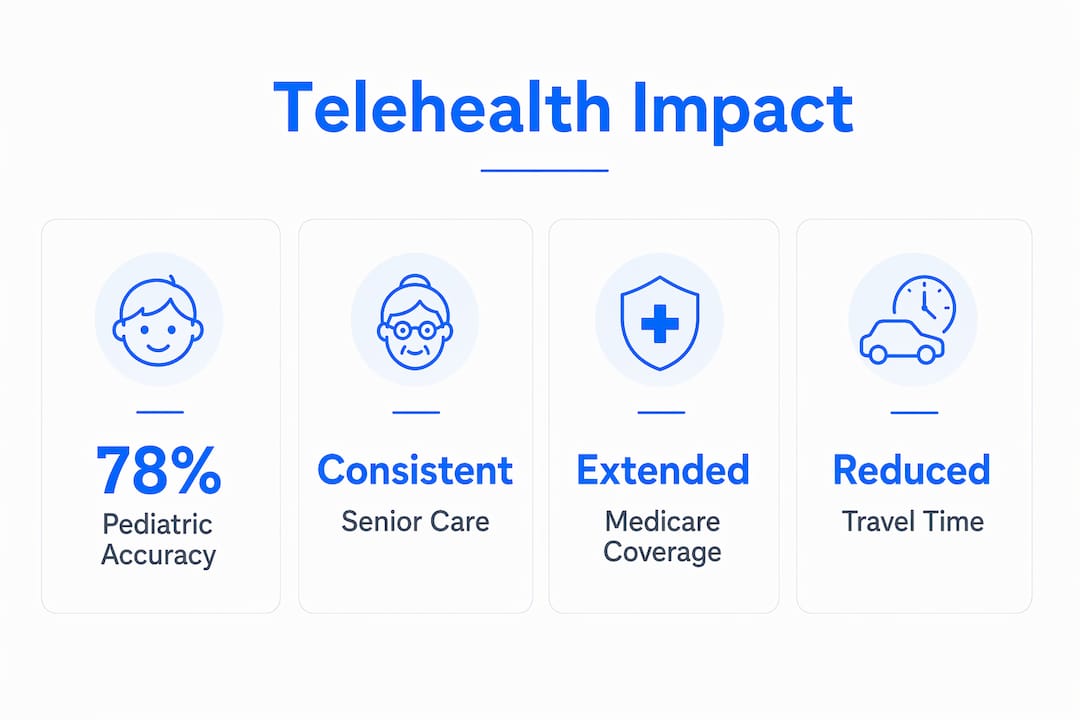
A prospective observational study in Catalonia involving 200 children found that acute pediatric video consultations achieved 78.2% diagnostic agreement with in-person visits, alongside high satisfaction scores from both families and providers. That figure is significant because pediatric care is one of the most access-sensitive areas in rural family health. Parents who cannot reach a pediatrician often default to emergency departments, which is costly and disruptive.
For older adults, the evidence is even more consistent. A systematic review of digital and remote health programs found that 71% of studies showed clinical improvement and 79% showed behavioral improvement in rural and underserved older adult populations. These gains span chronic disease management, medication adherence, and mental health outcomes. The implication is that telehealth and family wellness are closely linked when programs are designed with older adults’ needs in mind.
Pro Tip: Nurse-supported telehealth models, where a local nurse assists with device setup and triage before a remote physician consult, consistently outperform self-managed virtual visits in both adherence and clinical outcomes. If you are designing a rural program, build the nurse role in from the start.
Telehealth has real limitations for physical exam-intensive conditions. Dermatology, orthopedics, and acute abdominal presentations require hands-on assessment that video cannot replicate. The Catalonia pediatric study specifically notes that triage protocols are necessary to identify cases requiring in-person escalation. Hybrid care models, where telehealth handles triage and routine management while in-person visits are reserved for complex cases, represent the most clinically sound approach.
| Care type | Telehealth effectiveness |
|---|---|
| Pediatric acute consultations | 78.2% diagnostic agreement with in-person visits |
| Chronic disease management (older adults) | 71% of studies show clinical improvement |
| Behavioral health outcomes (older adults) | 79% of studies show behavioral improvement |
| Physical exam-intensive conditions | Lower accuracy; requires in-person escalation |
What policy and infrastructure factors support rural telehealth?
Policy is the foundation that makes rural telehealth programs financially viable. Without coverage, reimbursement, and infrastructure investment, even clinically proven programs cannot scale.
The most consequential recent development is the extension of Medicare telehealth flexibilities through December 31, 2027. This extension waives the rural-originating site requirement, meaning Medicare beneficiaries can receive telehealth services from their homes rather than traveling to a clinic. It also expands the types of providers eligible to deliver telehealth services. For rural families on Medicare, this is a direct reduction in access barriers. For policymakers, it provides a multi-year window to build permanent coverage frameworks.
On the funding side, the Centers for Medicare and Medicaid Services launched the Rural Health Transformation Program, committing $50 billion through 2030 to advance rural telehealth infrastructure, workforce development, and technology adoption. That level of investment signals a federal commitment to rural care that goes beyond temporary waivers.
Local government collaboration is equally important. A nationwide survey in Japan found that hardware and financial barriers are the primary obstacles to rural telemedicine adoption, and that government support at the local level is the most effective mechanism for overcoming them. The same dynamic applies in the United States, where county health departments and rural hospital networks often need direct procurement support and cybersecurity infrastructure before telehealth programs can launch.
Key infrastructure requirements for successful rural telehealth programs:
- Broadband connectivity: Minimum speeds for reliable video consultation require ongoing federal and state investment.
- Device access: Hardware subsidies for low-income families remove a critical adoption barrier.
- Cybersecurity protocols: Rural clinics often lack dedicated IT staff, making centralized security support necessary.
- Workflow integration: Telehealth must be embedded in existing clinical workflows, not treated as a separate system.
- Reimbursement clarity: Providers need consistent, predictable payment structures to sustain telehealth services.
You can review current insurance telehealth coverage across major plans to understand what your patients or family members are entitled to under current policy.
How can families and providers maximize telehealth benefits?
Knowing that telehealth works is different from knowing how to use it well. Both rural families and their care teams need practical frameworks to get consistent value from virtual visits.
For families, the starting point is onboarding. Patients who receive structured training on how to use a telehealth platform before their first appointment show significantly higher satisfaction and lower dropout rates. Investments in patient-facing onboarding are as important as the technology itself. This means walking through the app, testing audio and video, and understanding what to prepare before the visit.
For providers, the priority is setting clear expectations about when telehealth is appropriate and when it is not. A well-designed intake process asks about the nature of the complaint, the patient’s technical setup, and whether a physical exam is likely to be needed. This prevents wasted visits and builds patient trust in the system.
Practical steps for maximizing telehealth in rural settings:
- Conduct a technology readiness check before scheduling the first virtual visit. Confirm device type, internet speed, and the patient’s comfort with video platforms.
- Use a structured triage protocol to determine whether the presenting complaint can be managed remotely or requires in-person assessment.
- Assign a care navigator or nurse to support patients who are older, have low digital literacy, or are managing multiple chronic conditions.
- Prioritize behavioral health and specialty access through telehealth, since these are the services most often unavailable locally in rural communities.
- Document and review telehealth encounters with the same rigor as in-person visits to maintain continuity of care and support quality improvement.
Pro Tip: For behavioral health specifically, telehealth removes the stigma barrier that prevents many rural patients from seeking mental health care in small communities where everyone knows each other. Frame this as a feature, not just a convenience, when discussing telehealth options with patients.
Exploring the full range of primary care telehealth services available in 2026 can help both families and clinicians identify which conditions are best suited for virtual management.
Key takeaways
Telehealth improves rural family healthcare outcomes when it is supported by broadband access, trained care teams, clear triage protocols, and sustained policy investment.
| Point | Details |
|---|---|
| Barrier reduction | Telehealth addresses geographic, workforce, and digital barriers that limit rural family care access. |
| Clinical effectiveness | Pediatric teleconsultations reach 78.2% diagnostic agreement; older adult programs show 71% clinical improvement. |
| Policy foundation | Medicare telehealth extensions through 2027 and $50 billion in federal funding are reshaping rural access. |
| Triage protocols | Hybrid models that combine telehealth triage with in-person escalation deliver the safest outcomes. |
| Training and onboarding | Patient and provider training is as critical as technology deployment for sustained program success. |
What I’ve learned about rural telehealth that the research doesn’t fully capture
The data on rural telehealth is genuinely encouraging. But after working closely with health policy and digital care delivery for years, I’ve come to believe that the field’s biggest unsolved problem is not broadband or reimbursement. It’s the assumption that technology access equals technology use.
Rural families, particularly older adults and those with limited formal education, often have devices and internet connections that technically meet the requirements for telehealth. What they lack is confidence. A 70-year-old farmer with a smartphone and decent Wi-Fi may still avoid a telehealth visit because no one has ever shown him how it works or why it’s safe. That gap does not show up in coverage statistics.
The programs that actually move the needle are the ones that invest in community trust before they invest in platforms. Local health workers, trusted by the community, who can sit with a family and walk them through their first virtual visit, are worth more than any app feature. The nurse-supported model in the research literature reflects this, but it’s still treated as an enhancement rather than a baseline requirement.
My honest view is that policymakers need to stop treating digital literacy as a soft issue and start funding it the same way they fund broadband. The $50 billion Rural Health Transformation Program is a real commitment, but its impact will be limited if the communities it serves cannot confidently use the tools it funds.
Telehealth is not a replacement for rural hospitals or local physicians. It is a force multiplier for the care infrastructure that already exists. The communities that will benefit most are those that treat telehealth as one layer of a coordinated system, not a standalone solution.
— Guorui
How Helloklarity supports rural families with telehealth
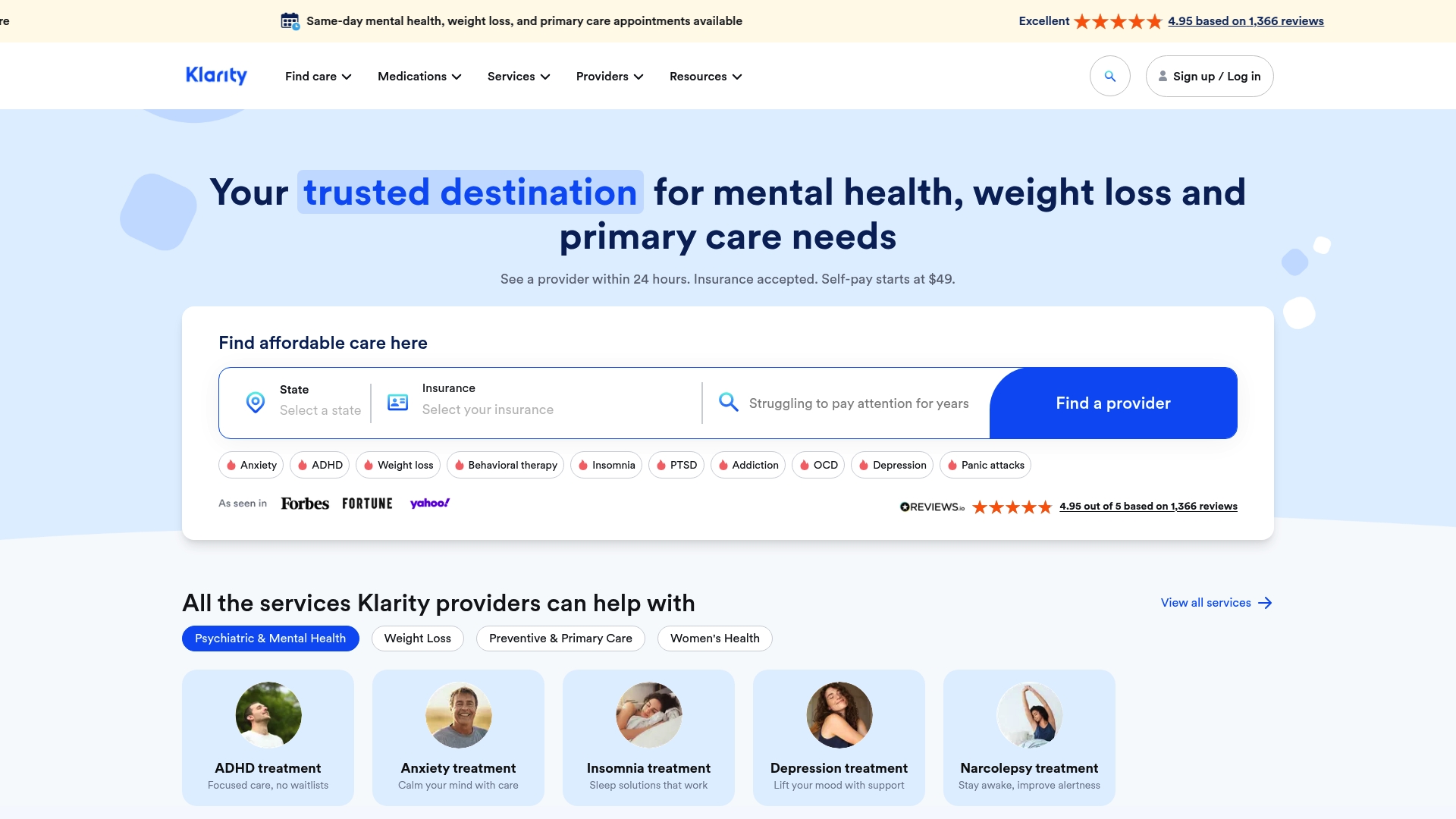
Rural families navigating limited local care options need a telehealth provider that is ready when they are. Helloklarity connects patients to over 1,000 licensed providers across mental health, primary care, and weight management, with same-day appointments available and most patients seen within 24 hours. Self-pay options start at $49, and Helloklarity accepts major insurance plans and health savings accounts, making it accessible for families across income levels. For rural communities where the nearest specialist may be hours away, that kind of access is not a convenience. It is a clinical necessity. Explore the full range of available telehealth services or find a provider in your state to get started today.
FAQ
What is the role of telehealth in rural family healthcare?
Telehealth delivers medical consultations, chronic disease management, and behavioral health services to rural families through video and digital platforms, removing the barriers of distance and provider shortages. It functions most effectively as part of a hybrid care model that combines virtual triage with in-person escalation when needed.
How effective are telehealth services for children in rural areas?
A prospective study of 200 children found that pediatric video consultations achieved 78.2% diagnostic agreement with in-person visits, with high satisfaction among families and providers. Effectiveness is highest for acute consultations where a physical exam is not required.
Does Medicare cover telehealth for rural patients in 2026?
Yes. Medicare telehealth flexibilities are extended through December 31, 2027, waiving the rural-originating site requirement so beneficiaries can receive covered telehealth services from their homes.
What are the biggest challenges of telehealth in remote areas?
The four main challenges are geographic isolation, physician workforce shortages, limited broadband access, and low digital literacy. Broadband availability and structured patient training are the two factors most strongly associated with successful program adoption.
When should rural families use telehealth versus in-person care?
Telehealth is appropriate for routine consultations, prescription management, behavioral health, and chronic disease follow-up. Conditions requiring a detailed physical exam, such as acute abdominal pain or orthopedic injuries, require in-person assessment and should be escalated through a clear triage protocol.
Recommended
- Affordable Telehealth Plans For Families In 2026
- What Telehealth Services Can I Get Online? Medical Guide
- What Is Telehealth Mental Health? Your 2026 Guide
- Types Of Primary Care Telehealth Services In 2026
Get expert care from top-rated providers
Find the right provider for your needs — select your state to find expert care near you.
Related posts


— Monday to Friday, 7:00 AM to 4:00 PM PST
Join our mailing list for exclusive healthcare updates and tips.

— Monday to Friday, 7:00 AM to 4:00 PM PST