 HSA & FSA accepted; best-value for top quality care
 Same-day mental health, weight loss, and primary care appointments available

 Accept major insurances and cash-payHSA & FSA accepted; best-value for top quality careSame-day mental health, weight loss, and primary care appointments availableAccept major insurances and cash-pay
Primary Care Explained: Benefits, Roles, and Services
Written by Klarity Editorial Team
Published: Jun 24, 2026

Primary care is defined as the first point of contact for comprehensive, continuous health care across a person’s life. The National Institutes of Health, the Centers for Medicare and Medicaid Services, and the American Academy of Family Physicians all recognize primary care as the foundation of an effective health system. What is primary care explained in practical terms? It is the ongoing relationship between you and a provider who knows your full medical history, manages your chronic conditions, orders preventive screenings, and coordinates referrals when you need a specialist. Research shows that having a consistent primary care source is linked to over 2 additional years of survival, independent of demographics. That single finding makes understanding primary care one of the most valuable things you can do for your long-term health.
What are the key roles and services in primary care?
Primary care providers deliver a wide range of services under one ongoing relationship. Family medicine physicians, general internists, pediatricians, nurse practitioners, and physician assistants all serve as primary care providers. Each one functions as your medical home base, handling everything from a sore throat to a diabetes diagnosis.
The core services include:
- Preventive care and screenings: Annual physicals, blood pressure checks, cholesterol panels, cancer screenings, and vaccinations.
- Chronic disease management: Ongoing treatment for conditions like hypertension, type 2 diabetes, asthma, and heart disease.
- Acute illness care: Diagnosis and treatment of infections, injuries, and short-term conditions.
- Behavioral health integration: Mental health screening, counseling referrals, and medication management for anxiety or depression.
- Care coordination: Referrals to specialists, follow-up on test results, and management of care across multiple providers.
- Personalized care plans: Long-term treatment strategies tailored to your age, risk factors, and health goals.
Embedding behavioral health into primary care improves access and supports clinicians managing complex patient needs. This matters because most people with anxiety or depression first mention symptoms to their primary care provider, not a psychiatrist.
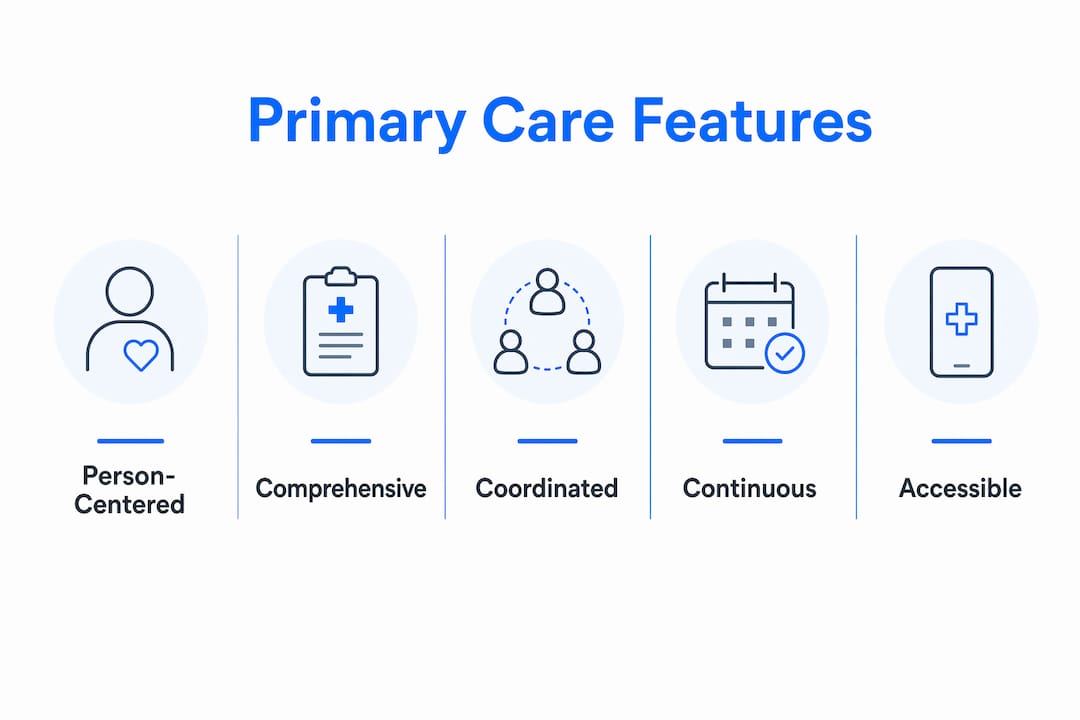
The core features of primary care, specifically comprehensiveness, coordination, and person-centeredness, are the actual drivers of its health benefits. Screenings alone do not explain the survival advantage. The quality of the ongoing relationship does.

Pro Tip: Bring a written list of all medications, supplements, and recent symptoms to every primary care visit. Providers with a complete picture make better decisions faster.
How does primary care differ from urgent care and specialty care?
Primary care, urgent care, and specialty care each serve a distinct purpose. Confusing them leads to fragmented treatment and higher costs.
Walk-in clinics and urgent care centers handle immediate, acute needs but lack the relational continuity and longitudinal records required for chronic care management. You can get a sprained ankle treated at an urgent care clinic. You cannot get your blood pressure managed there over five years.
| Feature | Primary care | Urgent care | Specialty care |
|---|---|---|---|
| Relationship type | Long-term, ongoing | One-time or episodic | Condition-specific |
| Medical records | Full longitudinal history | Limited or none | Focused on specialty |
| Scope | Whole person, all conditions | Acute, non-emergency | Single organ or disease |
| Preventive care | Yes | No | Rarely |
| Referral coordination | Yes | No | Sometimes |
| Best use case | Checkups, chronic disease, prevention | Minor injuries, infections | Heart disease, cancer, orthopedics |
Specialty care focuses on a specific organ system or disease category. A cardiologist manages heart conditions. An endocrinologist manages hormonal disorders. Neither replaces your primary care provider because neither tracks your full health picture. Your primary care provider is the one who notices that your new medication from the cardiologist is interacting with your blood pressure drug.
Pro Tip: Always send your specialist visit notes back to your primary care provider. Most specialists do not automatically share records, and your primary care provider needs the full picture to manage your care safely.
Why does access to primary care matter for your health?
The survival benefit from consistent primary care is not a minor statistical footnote. Primary care linked to longer life shows the advantage exceeds 2 years across diverse populations. That is a larger effect than many expensive medical interventions.
“The features of primary care that drive better outcomes are continuity, coordination, and comprehensiveness. These represent good doctoring, not just more screenings.” — Regenstrief Institute
Early detection is the most direct mechanism. A primary care provider who sees you annually catches elevated blood sugar before it becomes diabetes, identifies high blood pressure before it causes a stroke, and screens for colon cancer before it spreads. Each of those catches represents a potentially life-altering intervention at the lowest possible cost.
Access is also improving. Government initiatives in 2025–2026 attached 345,000 new patients to primary care teams in a single year, surpassing the initial target of 300,000 by 15%. That expansion reflects a growing policy recognition that primary care is the most cost-effective part of the health system. Policy proposals in the United States advocate increasing primary care spending to 13% of Medicare and Medicaid budgets to support prevention-oriented care. The current level falls well below that threshold, which is why access gaps persist in many communities.
Telehealth has accelerated access further. High-performing practices now offer new patient appointments within 72 hours, a dramatic shift from the weeks-long waits that once discouraged people from establishing care. Faster access means fewer patients turning to emergency rooms for conditions a primary care provider could have managed at a fraction of the cost.
What should you expect during a primary care visit?
A standard primary care visit covers more ground than most patients expect. The structure depends on whether you are coming in for a routine checkup, a new concern, or ongoing chronic disease management.
- Medical history review. Your provider reviews your records, current medications, allergies, and any changes since your last visit.
- Physical examination. Vital signs, weight, heart and lung sounds, and any targeted exam based on your symptoms or age-based screening guidelines.
- Preventive screenings. Blood draws, urine tests, or referrals for mammograms, colonoscopies, or bone density scans based on your age and risk factors.
- Chronic disease check-in. If you have diabetes, hypertension, or asthma, your provider reviews your numbers, adjusts medications if needed, and sets targets for the next visit.
- Behavioral health screening. Many practices now screen for depression, anxiety, and substance use at routine visits using validated tools like the PHQ-9 or GAD-7.
- Care plan update. Your provider summarizes findings, orders follow-up tests, and coordinates any specialist referrals before you leave.
Primary care visits for complex cases often run 30–45 minutes. That extended time is what allows a provider to address multiple conditions in one visit rather than scheduling four separate appointments. Patients with two or more chronic conditions benefit most from this whole-person approach.
Telehealth visits follow the same structure for most non-physical components. You can review medications, discuss lab results, manage mental health concerns, and update your care plan entirely through a video call. The types of primary care telehealth services available in 2026 cover a broader range of conditions than most patients realize, including chronic disease management, preventive counseling, and behavioral health.
One underused feature of integrated primary care is the warm handoff. Warm handoffs in primary care networks significantly increase patient follow-through on behavioral health referrals. Instead of handing you a phone number for a therapist, your provider walks you to the behavioral health clinician’s office or connects you directly in the same visit. That single step dramatically increases the chance you actually get the mental health care you need.
Key takeaways
Primary care is the single most evidence-backed investment you can make in your long-term health, delivering survival benefits, early detection, and coordinated care that no other part of the health system replicates.
| Point | Details |
|---|---|
| Survival benefit is real | Consistent primary care is linked to over 2 additional years of survival across diverse populations. |
| Scope goes beyond checkups | Primary care covers chronic disease, behavioral health, preventive screenings, and specialist coordination. |
| Not interchangeable with urgent care | Walk-in clinics handle acute needs but cannot manage chronic conditions or maintain longitudinal records. |
| Access is improving | Government programs and telehealth platforms now connect patients to primary care within 72 hours. |
| Behavioral health belongs here | Integrated behavioral health and warm handoffs in primary care increase mental health follow-through. |
The case for treating primary care as a long-term investment
I have spent years watching patients cycle through urgent care clinics, emergency rooms, and specialist offices without anyone connecting the dots. The pattern is always the same. No one is tracking the full picture. No one knows that the fatigue, the weight gain, and the elevated blood pressure are three parts of the same problem.
Primary care fixes that. The relationship is the treatment. When a provider knows you over years, they catch things that a one-time visit never would. A slightly elevated A1C at age 40 means nothing in isolation. Seen against your family history and your weight trend over three years, it is a clear warning that changes everything.
The underinvestment problem is real. The United States spends a fraction of its health budget on primary care relative to what the evidence supports. That gap shows up in preventable hospitalizations, late-stage cancer diagnoses, and unmanaged mental health conditions. Fixing it requires both policy change and individual action.
The individual action is simple. Establish care with a primary care provider now, not when you are sick. Share your full history. Ask about behavioral health. Show up for your annual visit even when you feel fine. The primary care visit components that seem routine are the ones that catch problems early enough to matter.
The warm handoff model for behavioral health is one of the most underrated advances in primary care delivery. Handing a patient a referral number has a poor follow-through rate. Walking them to the clinician, or connecting them live on a telehealth platform, changes the outcome entirely. Every primary care practice should be doing this.
— Guorui
Primary care through Helloklarity: same-day access, no waiting
Helloklarity connects patients to licensed primary care providers through a telehealth platform built for speed and accessibility. Appointments are available within 24 hours, and the network includes over 1,000 licensed providers across the country.
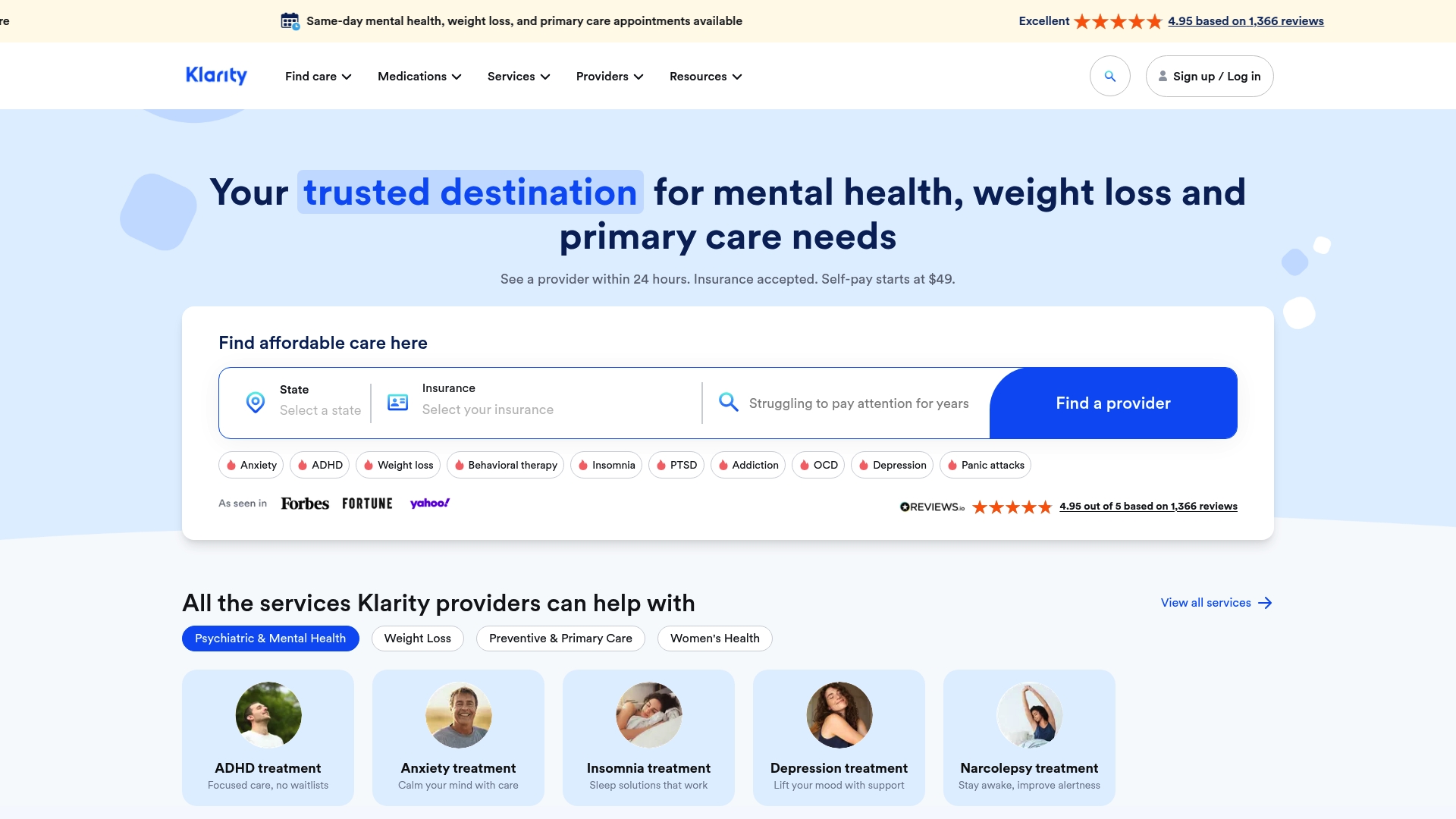
Self-pay options start at $49, and Helloklarity accepts major insurance plans and health savings accounts. Whether you need chronic disease management, preventive care, or a same-day consultation, you can browse telehealth services and book directly without a referral. Patients who need help finding a provider in their area can also find providers by state to connect with licensed clinicians near them. Primary care does not have to mean a weeks-long wait. With Helloklarity, it starts today.
FAQ
What is primary care in simple terms?
Primary care is the ongoing, first-contact health care you receive from a provider who manages your overall health. It covers prevention, chronic disease, acute illness, and behavioral health under one continuous relationship.
Who provides primary care?
Primary care providers include family medicine physicians, general internists, pediatricians, nurse practitioners, and physician assistants. All are trained to manage a broad range of health conditions across your lifespan.
How is primary care different from urgent care?
Urgent care handles immediate, non-emergency conditions without continuity or longitudinal records. Primary care maintains your full medical history and manages your health over time, making it the right choice for chronic conditions and prevention.
Does primary care include mental health?
Yes. Most primary care practices screen for depression and anxiety at routine visits, and many now embed behavioral health clinicians directly into the practice. Integrated behavioral health improves access and increases the chance patients follow through on mental health referrals.
How often should you see your primary care provider?
Most adults benefit from at least one annual visit for preventive care and screenings. Patients managing chronic conditions like diabetes or hypertension typically see their provider more frequently, often every 3–6 months.
Recommended
- What Does A Primary Care Visit Include?
- Common Primary Care Conditions Treated Online: 2026 Guide
- Types Of Primary Care Telehealth Services In 2026
- Telehealth Primary Care Platform Features Explained
Get expert care from top-rated providers
Find the right provider for your needs — select your state to find expert care near you.
Related posts


— Monday to Friday, 7:00 AM to 4:00 PM PST
Join our mailing list for exclusive healthcare updates and tips.

— Monday to Friday, 7:00 AM to 4:00 PM PST